
Quick answer: To start a PG in India: research demand in your target area, choose a building and location, decide your tenant type, estimate costs and break-even occupancy, check local licensing and safety rules, furnish and set up utilities, price your beds, market before opening, and set up systems for rent, records and complaints from day one. Costs and rules vary widely by city, so verify every figure locally.
The PG business attracts people because demand in cities is steady and the model is understandable: rent beds, provide services, collect monthly income. But the gap between a PG that earns well and one that struggles is often planning and operations, not luck. This guide walks through the steps in order. It is general information, not legal or financial advice.
Step 1: Understand who you are serving
Start with the customer, not the building.
- Students: near colleges and coaching centres. Price-sensitive, seasonal. See PG seasonality.
- Working professionals: near offices and transport. Value quality, Wi-Fi and flexibility.
- Women-only or men-only: safety and rules differ.
- Interns and short-stay: need flexible terms.
Visit the area, talk to potential tenants, brokers and existing PGs. Ask what they pay, what they like and what annoys them.
Step 2: Research the market
For your target area, note:
| Question | Why |
|---|---|
| How many PGs exist nearby? | Competition |
| What do they charge for single, double and triple sharing? | Pricing |
| Are beds full? Ask owners or check listings | Demand |
| What facilities do they offer? | Standard |
| What do reviews complain about? | Opportunity |
| What is missing? | Differentiation |
Do not rely on one source. Check listings, walk through, call as a prospective tenant.
Step 3: Choose the location and building
Good locations are close to where tenants study or work, safe at night, near transport and basic shops, and not too noisy.
For the building, check:
- layout: rooms, bathrooms, common spaces, kitchen
- number of beds you can fit comfortably and legally
- ventilation, light and water supply
- electrical capacity
- parking and access
- structural condition
- permissions for PG use
- neighbours and society rules
Decide whether to lease or buy. See leased vs owned building economics.
Step 4: Build a simple budget
List all costs:
| Cost type | Examples |
|---|---|
| One-time | Deposit or purchase, repairs, painting, furniture, mattresses, appliances, CCTV, signage, licences |
| Monthly | Rent or EMI, salaries, food, electricity, water, internet, maintenance, supplies, software |
| Reserve | Several months of fixed costs while you fill beds |
Then calculate break-even occupancy: the share of beds you must fill to cover costs. See break-even occupancy for a PG. Test best, expected and slow scenarios. If the plan works only at full occupancy, rethink it.
Step 5: Check legal and compliance requirements
There is no single national PG law. Requirements depend on state, city and building type. Ask the local authorities about:
- registration or licensing for PGs or hostels
- trade licences
- fire safety requirements
- police intimation or verification
- food safety if you serve meals
- building use and zoning
- society or landlord permissions
- tax registration as applicable
Read our guide to PG licensing and municipal compliance and the tax guide for PG owners. Consult a CA and a lawyer for your situation. For a shorter overview, see our guide on how to start a PG business in India. Also see leave and license vs tenancy.
Step 6: Set up the property
- Repair and paint.
- Provide beds, mattresses, cupboards, study tables and chairs.
- Make sure bathrooms and plumbing work.
- Install reliable Wi-Fi.
- Set up the kitchen and dining area if you serve food.
- Add safety: fire extinguishers, lighting, CCTV in common areas, secure entry. See fire safety checklist.
- Arrange laundry, drinking water and power backup if possible.
Quality furniture and a clean look matter more than luxury.
Step 7: Decide pricing and policies
- Set rent per bed by sharing type. See how to set rent per bed pricing.
- Decide deposit, notice period and lock-in.
- Decide what is included: food, electricity, Wi-Fi, laundry.
- Write house rules. See PG house rules.
- Prepare an agreement suited to your model.
Step 8: Hire and train
Start small: a manager or caretaker, a cook if you serve food and housekeeping. See warden and manager hiring. Verify staff and give clear routines.
Step 9: Market before you open
- Create a Google Business Profile. See this guide.
- Take good photos and write a clear listing. See listing guide.
- List on relevant platforms.
- Inform nearby colleges, offices and brokers.
- Ask early tenants for reviews.
- Offer pre-booking with a clear token policy.
Step 10: Set up systems from day one
Many owners start with notebooks and WhatsApp, then struggle to untangle records later. Set up:
- tenant records and agreements
- rent due dates, reminders and payment tracking
- vacancy and enquiry tracking
- complaint log
- expense records
- reports you review monthly
You can start with simple sheets, but plan to move to software as you grow. See Excel vs PG management app and the software buyer's checklist.
Step 11: Track the right numbers
| Metric | Review |
|---|---|
| Occupancy | Weekly |
| Collection rate | Monthly |
| Profit per bed | Monthly |
| Complaint resolution time | Weekly |
| Enquiries to bookings | Monthly |
| Reviews and rating | Monthly |
Common mistakes
- Opening without market research
- Underestimating working capital
- Ignoring compliance
- Poor photos and vague listings
- No agreement or rules
- Hiring unverified staff
- Skipping record-keeping
- Copying competitors' prices without checking costs
- Expanding too fast
How software helps
The earlier you keep clean records, the easier everything becomes. The PG Master Owner App helps new PG owners track rent, tenants, vacancies and expenses from the first month.
A realistic first-year view
In the first three months, you are setting up, filling beds and fixing surprises. In months four to six, you stabilise routines and start to see real cost and profit numbers. In months seven to twelve, you decide whether to improve, hold or expand. Be patient and keep your numbers honest. Owners who write down their plan, track the figures monthly and adjust quickly tend to avoid the worst mistakes.
Frequently asked questions
How much money do I need to start a PG? It depends on your city, building and size. Build a budget for one-time costs, monthly costs and a reserve, and test it against break-even occupancy.
Is the PG business profitable? It can be, but profit depends on occupancy, pricing, costs and management. Calculate profit per bed with your own numbers.
Do I need a licence to run a PG? Requirements vary by state and city. Ask your local municipal office and police station.
Which is better: students or working professionals? Neither is better everywhere. It depends on your location and your ability to serve them.
Can I start with a few beds? Yes. Starting small lets you learn, though fixed costs per bed may be higher.
Next step
Choose one target area, visit five PGs there and write your first budget. When you are ready to set up systems, try the PG Master Owner App or book a demo.
Stop Chasing Rent & Juggling Spreadsheets
ApnaRent helps 170+ owners send automated WhatsApp rent reminders, track live bed vacancy, collect digital KYC, and reconcile expenses in real time.

More from ApnaRent
View all articles Starting a PG
PG vs Hostel vs Co-Living: Which Model Should You Run?
ApnaRent · 6 Jan 2027 · 7 min
 Finance and Profit
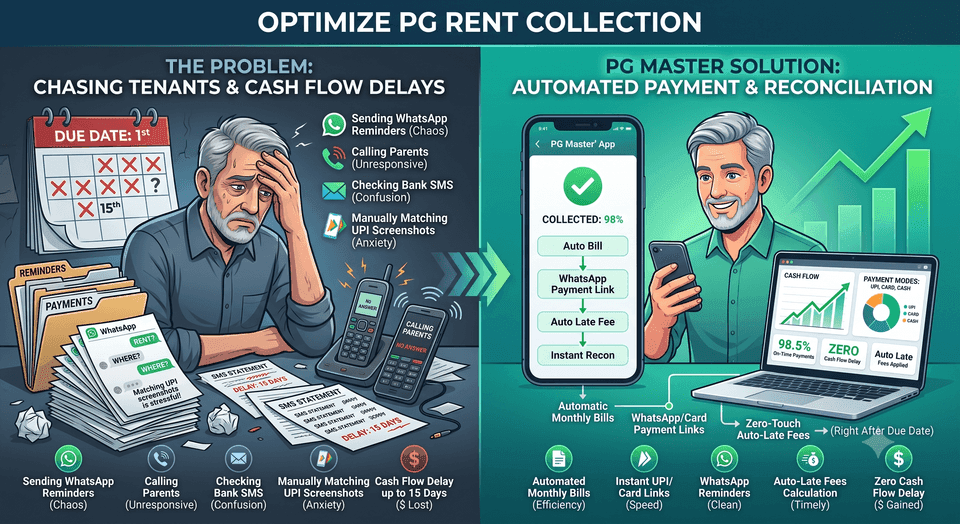
PG Owner KPIs: 10 Metrics to Track to Grow Profit
ApnaRent · 5 Jan 2027 · 7 min
 Finance and Profit
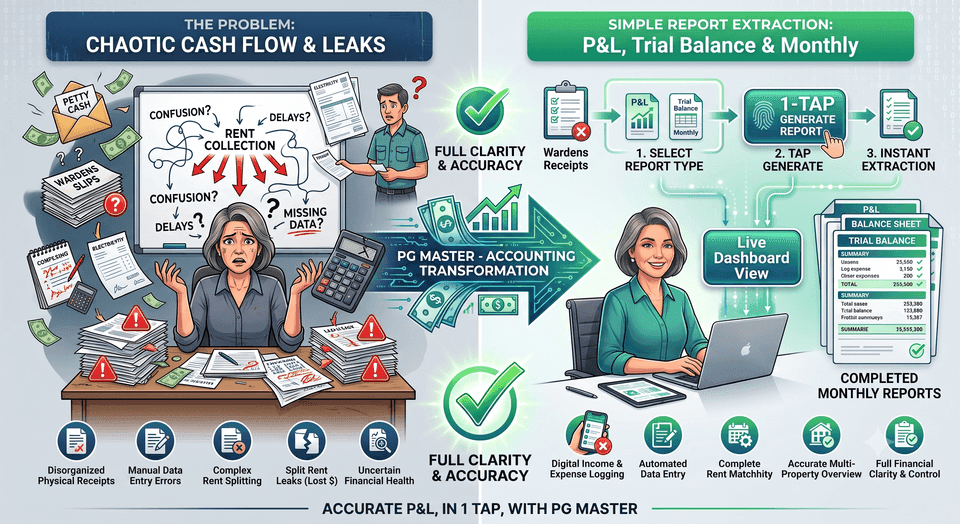
PG Owner's Monthly Closing Checklist: Rent, Expenses and Reports
ApnaRent · 2 Jan 2027 · 7 min