
Quick answer: Keeping a tenant is cheaper than finding a new one. To improve PG tenant retention, find out why people leave, fix response time on complaints, keep rooms and food consistent, be fair and transparent on money, build a sense of community, ask for feedback regularly and make renewals easy. Track how long tenants stay on average and the reasons for each move-out.
A move-out is not only a lost rent cheque. It is also cleaning, repairs, listing, calls, visits and days of vacancy, all before the next tenant pays. If an average tenant stays a few months longer, your occupancy and profit rise without any new marketing. Yet most owners track new bookings and ignore retention.
Start by measuring
You cannot improve what you do not count. Track:
| Metric | How |
|---|---|
| Average length of stay | Average months between joining and leaving |
| Move-outs per month | Count |
| Move-out rate | Move-outs ÷ average occupied beds |
| Reasons for leaving | Ask every tenant who gives notice |
| Renewal rate | Tenants who renew at agreement end ÷ those due |
| Days to refill | Days between move-out and next move-in |
After a few months, you will see patterns: certain rooms, floors or seasons with higher churn.
Why tenants leave
Typical reasons include:
- Course or job ended. Natural and often unavoidable. See seasonality.
- Price. A cheaper place nearby, or a rent increase.
- Service issues. Slow repairs, ignored complaints.
- Food. Taste, variety or hygiene.
- Roommate or neighbour conflict.
- Safety or privacy concerns.
- Hidden or confusing charges.
- Rules perceived as unfair.
- Moving to a flat or leaving the city.
Some of these you can influence. Focus on those.
Ten ways to improve retention
1. Fix the first 30 days
The first month sets the tone. Give a warm welcome, explain rules, check that the room is ready and follow up after a week. Early problems left unsolved cause early exits. See the tenant onboarding checklist.
2. Resolve complaints quickly
Fast, visible resolution is the strongest retention tool. Use a ticket log, set response times and update tenants. See complaint management.
3. Keep the basics consistent
Water, power, Wi-Fi, cleanliness and food quality matter every day. Fancy extras cannot make up for unreliable basics. Walk through the property daily.
4. Be fair and clear about money
Make rent, deposit, late fees and deductions clear in writing. Send reminders before due dates, issue receipts and settle deposits on time. Unclear charges are a common reason for bad reviews and exits. See late fee policy and security deposit checklist.
5. Handle roommate conflicts early
Ask about preferences when allocating beds. When a conflict arises, listen to both sides and offer a room change if possible. Do not wait until someone gives notice.
6. Build community lightly
Small gestures can create loyalty: festival dinners, birthday notes, a movie night, a study group or a shared corner with games. These need little money, and they make a PG feel like more than a bed.
7. Ask for feedback regularly
Once a month or quarter, send a short survey or ask a few tenants directly. Ask what works, what does not and what they would change. Then act and tell them what changed. Feedback that goes nowhere trains people to stop giving it.
8. Notice early warning signs
Late payments, fewer interactions, more complaints or a tenant asking about notice rules can signal that they are thinking of leaving. Reach out kindly.
9. Make renewals easy
Contact tenants ahead of the agreement end. Offer a simple renewal with clear terms. Consider small loyalty benefits for long-stayers, such as a room upgrade priority or a freeze on rent for a period. Do this only if it fits your costs. See when to raise rent.
10. Leave on good terms
Make move-out smooth and fair. A tenant who leaves happy may return, refer others or leave a positive review. See move-out checklist.
Use referrals
Happy tenants know friends and colleagues who need a room. A simple referral approach can fill beds at low cost. Offer a small reward when a referral joins and stays for a minimum period, and keep the rules clear.
Exit interviews
When someone gives notice, ask three questions:
- Why are you leaving?
- What could we have done better?
- Would you recommend us?
Record answers in one place. After 20 to 30 exits, you will have a clear list of fixable issues.
What not to do
- Raise rent without notice or reason
- Ignore complaints
- Penalise honest feedback
- Over-restrict with rules
- Compare tenants unfairly
- Argue publicly in group chats
- Treat renewals as automatic
How software helps
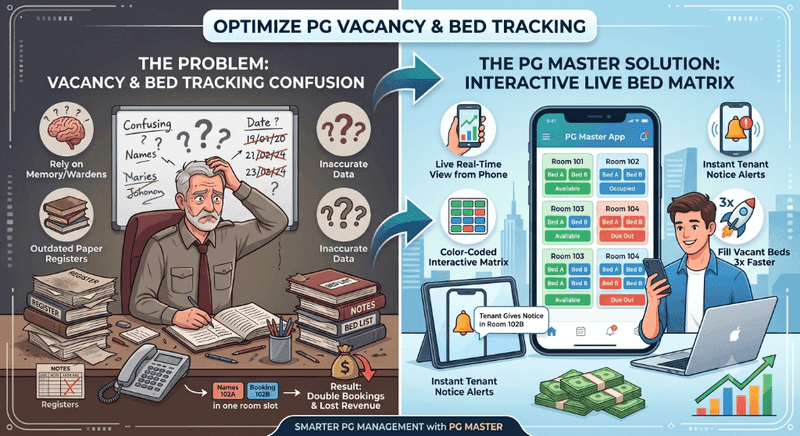
Retention is easier when you can see tenant history, dues, complaints and agreement dates in one place. The PG Master Owner App keeps tenant records and payment history and supports reminders so you know who is due, who is overdue and who is approaching renewal. See tenant management and live bed occupancy tracking.
A simple retention scorecard
Each quarter, list every tenant who left and tag the reason: course or job ended, price, service, food, conflict, safety or relocation. Count each tag. Beside it, list what you changed in response. If "service" appears five times and you changed nothing, that is the first project. If most exits are "job ended," your retention may be healthy and the focus should shift to faster refilling. Sharing the scorecard with your manager keeps the whole team focused on the same outcome: fewer avoidable exits and quicker refills.
Small gestures that cost little
Simple things help people feel that a PG is a home. Remember a tenant's name and birthday. Send a short festival greeting. Provide a first-aid kit and tell residents where it is. Keep a few umbrellas for emergencies. Arrange a simple dinner on a festival night. Make a quiet study corner. These gestures require little money, but they change how tenants talk about you. When a friend asks where to stay, a happy tenant remembers the owner who made them feel looked after.
Frequently asked questions
What is a good tenant retention rate for a PG? It depends on tenant type and local factors. Compare your own numbers over time and by tenant segment rather than chasing a generic figure.
How can I stop tenants leaving after a few months? Fix early problems, resolve complaints fast, keep basics reliable, ask for feedback and make renewals easy.
Do discounts improve retention? They can help in some cases, but service quality and fairness usually matter more. Use discounts carefully.
Should I ask tenants why they leave? Yes. Exit feedback is among the best sources for improving your PG.
How early should I start the renewal conversation? Several weeks before the agreement ends, so tenants can plan.
Next step
Start recording the reason for every move-out this month. After ten, look for the top two causes and fix them. To keep tenant history, dues and renewals in one view, try the PG Master Owner App or book a demo.
Stop Chasing Rent & Juggling Spreadsheets
ApnaRent helps 170+ owners send automated WhatsApp rent reminders, track live bed vacancy, collect digital KYC, and reconcile expenses in real time.

More from ApnaRent
View all articles Starting a PG
PG vs Hostel vs Co-Living: Which Model Should You Run?
ApnaRent · 6 Jan 2027 · 7 min
 Finance and Profit
PG Owner KPIs: 10 Metrics to Track to Grow Profit
ApnaRent · 5 Jan 2027 · 7 min
 Finance and Profit
PG Owner's Monthly Closing Checklist: Rent, Expenses and Reports
ApnaRent · 2 Jan 2027 · 7 min