
Quick answer: Open a second PG only when the first runs smoothly without you doing everything: occupancy is stable, collections are on time, records are clean, you have a reliable manager and enough cash for the new property's fit-out and first months. Write down your processes, choose a location with proven demand, plan compliance, set up one system for both properties and open in phases. Scaling a messy PG just doubles the mess.
Many PG owners dream of a chain. The step from one to two is the hardest, because it is where the owner stops being able to see everything personally. Problems that were small in one property become expensive in two. This checklist helps you test whether you are ready and what to prepare.
Part 1: Is the first PG ready?
Answer honestly. If you answer "no" to several, fix them first.
- Occupancy has been stable at a healthy level for several months
- Rent is collected on time without daily chasing
- You know profit per bed and break-even occupancy. See profit per bed
- Expenses are recorded and reviewed monthly
- Tenant records and agreements are organised
- Complaints are logged and resolved on a routine
- A manager can run daily operations when you are away
- You can leave for a week without a crisis
- Reviews and tenant satisfaction are positive
- You have cash reserves beyond what you plan to invest
If the first PG depends on you answering every call, branch two will fail.
Part 2: Test the money
Opening a second property costs more than most people expect. Estimate:
| Item | Notes |
|---|---|
| Deposit or purchase cost | Per lease or purchase terms |
| Fit-out and repairs | Painting, electrical, plumbing, safety |
| Furniture and appliances | Beds, mattresses, cupboards, ACs, geysers |
| Licences and compliance | Local permissions, fire safety |
| Marketing and launch | Photos, listing, signage |
| Staff hiring and training | Before and after opening |
| Working capital | Several months of fixed costs while you fill beds |
Plan for a slower fill than you hope. If branch two needs to be full from day one to survive, it is too risky. Use break-even occupancy to see how many beds you must fill.
Also ask: will branch one's performance suffer if you divert money or attention? Keep a cushion.
Part 3: Choose the location with evidence
- Check demand: colleges, offices, hospitals, transport.
- Compare competitor prices and quality.
- Visit at different times of day.
- Talk to local residents, brokers and tenants.
- Check safety, noise and access.
- Understand landlord, building and local regulations.
- Prefer areas you can reach quickly in an emergency.
Do not assume that what worked in one area will work in another. Student areas, office areas and mixed areas differ.
Part 4: Write your playbook
Document how branch one runs:
- Tenant onboarding steps. See onboarding checklist
- Rent due dates, reminders and late fees
- Complaint handling. See complaint management
- Housekeeping and food schedules
- Move-out and deposit process
- Staff duties and reporting
- Weekly and monthly checks
A playbook lets a new manager start with clarity. It also reveals gaps in your own process.
Part 5: Build the team
- Hire or promote a manager for branch two before opening.
- Train them in branch one first.
- Define their authority: what they can approve and what needs you.
- Use role-based access so each person sees only what they need. See role-based warden permissions.
- Create a reporting routine: a daily update and a weekly call.
- Plan cover for sickness and leave.
Part 6: One system for both
Manage both properties in one place from day one. Separate spreadsheets and chats create double the work and hide comparisons.
Set up the same:
- rent and fee structure
- tenant record format
- payment collection and reminders
- expense categories
- reports
You should be able to see occupancy, collections, dues and expenses for each property and combined. See running multiple properties from your phone.
Part 7: Compliance and safety
Do not copy branch one and assume it is fine. Each building may have different requirements.
- Local registration, licences or permissions
- Fire safety. See PG fire safety checklist
- Police verification process. See police verification checklist
- Electrical load and safety
- Agreements suited to the building and lease
Part 8: Plan the opening
- Soft launch. Open part of the building first if possible.
- Pre-book. Start taking enquiries and tokens before the building is complete.
- Strong first impression. Clean, painted, working Wi-Fi, functioning geysers.
- Early tenants matter. They set the culture and write the first reviews.
- Daily check for the first 30 days.
- Collect feedback early and fix issues quickly.
Part 9: Measure branch two separately
Track from the start:
| Metric | Why |
|---|---|
| Occupancy | Fill speed |
| Collection rate | Cash flow |
| Cost per bed | Efficiency |
| Profit per bed | Viability |
| Complaints and resolution time | Quality |
| Reviews | Reputation |
Compare with branch one but allow for a ramp-up period.
Common mistakes
- Expanding before the first PG is stable
- Underestimating fit-out and working capital
- Choosing location by price alone
- No manager
- Different systems for each property
- Copying branch one blindly
- Not tracking each property separately
- Over-leveraging
How software helps
The PG Master Owner App is built for multi-property control: rent, tenants, vacancies, expenses and staff access across properties in one login. See multi-property chain control.
What a good first 90 days looks like
In the first 30 days, you are filling beds, fixing teething problems and learning how the building behaves. In the next 30, you are tightening routines, reviewing costs against your plan and collecting feedback. In the last 30, you decide whether to adjust pricing, services or staffing, and you compare the property with branch one on the same metrics. If you reach 90 days with clear numbers and a manager who handles daily work, you have a foundation for a third property. If not, pause expansion and fix operations first.
Frequently asked questions
When should I open a second PG? When the first runs smoothly with stable occupancy, clean records and a reliable manager, and you have enough cash for the new property and a slow start.
How much money do I need to open a second PG? It depends on size, location and whether you lease or buy. Estimate deposit, fit-out, furniture, compliance, marketing, staff and working capital.
Can I manage two PGs alone? Possible for a short time, but a manager and clear systems are important for sustainability.
Should the second PG copy the first? Copy your processes, not your assumptions. Test demand and requirements for the new location.
How long until branch two is profitable? It varies. Plan for a ramp-up period and keep reserves.
Next step
Score yourself on the checklist in Part 1, then fix the weakest three items before you sign anything. To manage both properties from one app, try the PG Master Owner App or book a demo.
Stop Chasing Rent & Juggling Spreadsheets
ApnaRent helps 170+ owners send automated WhatsApp rent reminders, track live bed vacancy, collect digital KYC, and reconcile expenses in real time.

More from ApnaRent
View all articles Starting a PG
PG vs Hostel vs Co-Living: Which Model Should You Run?
ApnaRent · 6 Jan 2027 · 7 min
 Finance and Profit
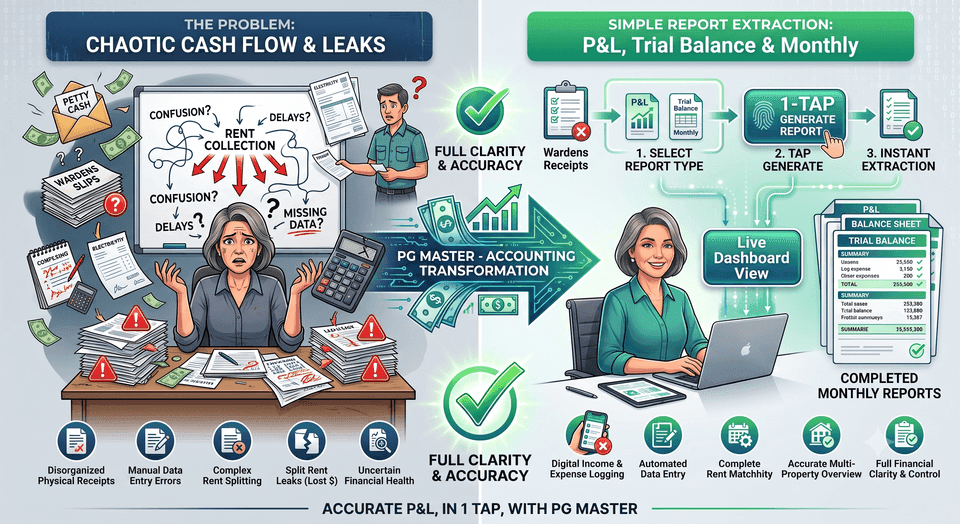
PG Owner KPIs: 10 Metrics to Track to Grow Profit
ApnaRent · 5 Jan 2027 · 7 min
 Finance and Profit
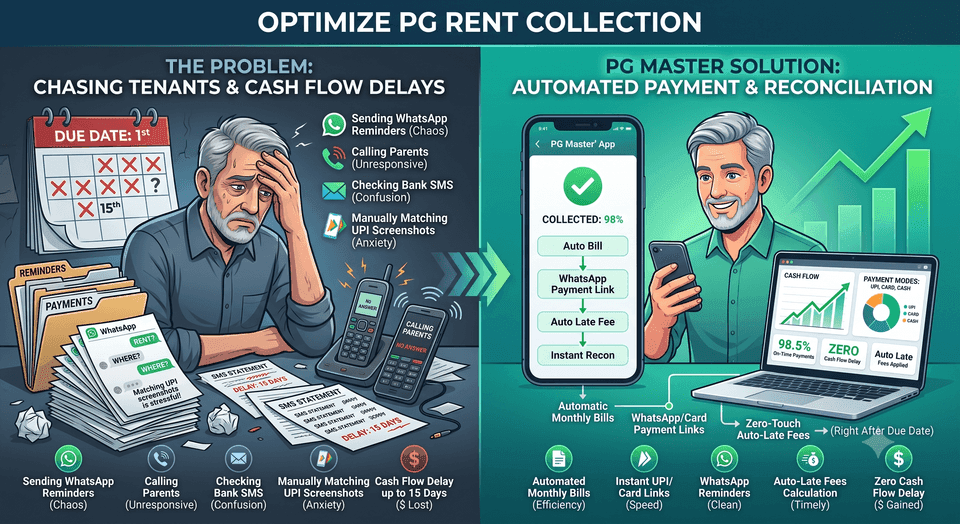
PG Owner's Monthly Closing Checklist: Rent, Expenses and Reports
ApnaRent · 2 Jan 2027 · 7 min