
Quick answer: Preventive maintenance means checking and servicing things before they fail. For a PG, use a schedule with daily walk-rounds, weekly checks of water, power and kitchen, monthly servicing of appliances and pest control, quarterly deep checks and yearly jobs like painting and electrical inspection. Record each check and fix small issues immediately. It costs less than emergency repairs and prevents the complaints that drive tenants away.
Most PG complaints are about the same few things: water, power, Wi-Fi, cleanliness and appliances. Most of those problems give warning signs first: a slow drain, a flickering light, a weak geyser. Owners who catch the signs fix them cheaply. Owners who wait fix them in an emergency, at night, with an unhappy tenant waiting.
The principle
Do small checks often. Do bigger checks on a calendar. Write everything down. Assign every task to a named person.
Daily (10 to 15 minutes, manager or warden)
- Walk the property in the morning and evening
- Check common bathrooms: cleanliness, water, leaks, lights
- Check corridors, stairs and gate: lights working, no obstruction
- Check kitchen and dining: cleanliness, gas safety, waste disposal
- Check water tanks and motor operation
- Note any complaints and log them
- Look for signs of electrical problems: burning smell, hot sockets
- Confirm CCTV is recording, if installed
- Ensure drinking water is available
Weekly
- Deep clean common areas and bathrooms
- Check Wi-Fi speed and coverage in different rooms
- Test geysers and water heaters in sample rooms
- Inspect taps, flushes and drains
- Check fans, lights and switches in common areas
- Review open complaints and chase vendors
- Check stock of cleaning supplies and bulbs
- Empty and clean bins and waste areas
- Check smoke detectors and exit paths. See fire safety checklist
Monthly
- Clean water tanks or follow the schedule you set with your supplier
- Service or clean AC filters
- Clean exhaust fans and chimney in the kitchen
- Pest control treatment, if scheduled
- Check RO or water purifier filters
- Test inverter or power backup
- Check CCTV storage and camera angles
- Inspect furniture: bed frames, cupboards, chairs
- Check electrical panels for loose fittings (by a qualified person)
- Review expenses on maintenance. See expense tracking
Quarterly
- Check roof, terrace and drainage before the rains
- Inspect wall damp patches, cracks and peeling paint
- Service geysers and pumps
- Check gas pipes and regulators
- Run a fire drill. See fire safety
- Inspect mattresses and bedding, replace damaged items
- Review vendors and rates
Yearly
- Electrical inspection by a qualified electrician
- Repaint rooms and common areas as needed
- Waterproofing check
- Service all ACs
- Replace old wiring or switches
- Renew licences and certificates
- Review insurance
- Deep clean and refresh the entire property
Use slow months for bigger jobs. See PG seasonality.
Room turnover checklist
Every time a tenant leaves, use the gap to reset the room.
- Inspect and document condition. See move-out checklist.
- Repair damage and replace worn items.
- Deep clean the room and bathroom.
- Check electrical points, fans, lights and windows.
- Test AC, geyser and Wi-Fi.
- Wash or replace mattress cover and bedding.
- Take new photos for listing.
- Mark the bed as ready.
A ready room fills faster and avoids disputes at the next move-in.
Keep a maintenance log
For each task or repair, record:
| Field | Example |
|---|---|
| Date | 14 Nov |
| Location | Room 204 bathroom |
| Issue | Slow drain |
| Action | Cleaned trap |
| Done by | Plumber, Raju |
| Cost | ₹[amount] |
| Follow-up | Check in 1 week |
Over time, the log shows what keeps failing, which vendors are reliable and where to invest in replacement. A geyser that has been repaired three times is cheaper to replace.
Vendors and contacts
Keep a list of reliable vendors: plumber, electrician, carpenter, painter, pest control, AC service, RO service, gas supplier and a general handyman. Include phone numbers, rates and response times. Test one or two jobs before trusting them with bigger work. Have a backup for each trade.
Budget for maintenance
Set aside a monthly maintenance budget, and a reserve for large replacements. If you track maintenance as a separate expense line, you can see its cost per bed and compare properties. See expense tracking across properties.
Common mistakes
- Waiting for failure
- No written schedule
- No log, so repeat problems go unnoticed
- Cheap repairs that fail again
- Ignoring leaks
- Single vendor with no backup
- Skipping safety checks
- Not telling tenants about planned work
Communicate planned work
Tell tenants in advance about water shutdowns, pest control or painting. Give dates and times, and explain what to do. Notices reduce complaints.
How software helps
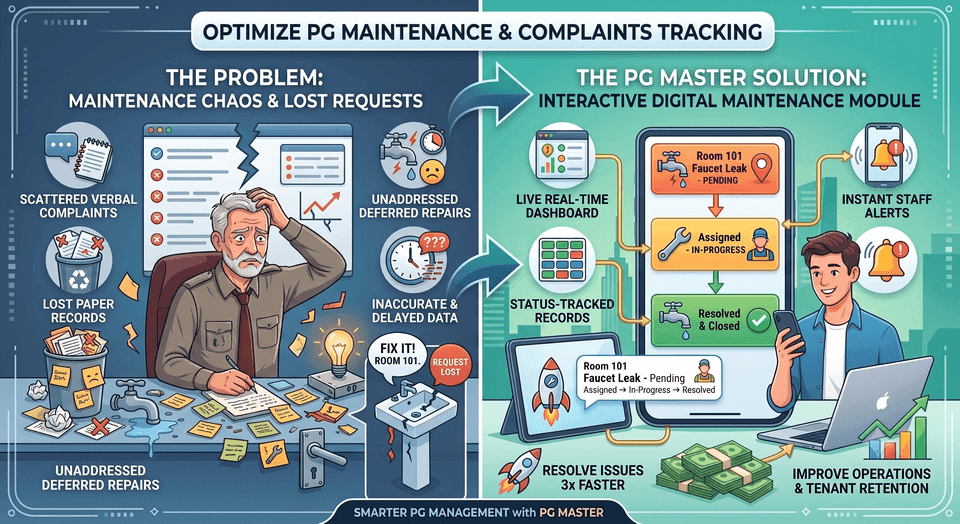
A schedule is only useful if tasks get done. Use reminders, a complaint log and a record of expenses. The PG Master Owner App tracks tenants, complaints, expenses and announcements in one place. See tenant management.
A sample month in the life of a maintenance calendar
Week one: AC filter cleaning on all floors and RO filter check. Week two: pest control in the kitchen and bathrooms and a review of open tickets. Week three: geyser and pump checks, emergency light test. Week four: inspect furniture, tighten loose fittings and test the power backup. Mark each task with a name and a date, tick it off and add a note if something needs follow-up. When a task slips, you will see it. When something fails anyway, the log will show when it was last checked, which helps you decide whether the vendor or the schedule needs to change.
How to brief your handyman
Give vendors a short written list for each visit: the room, the fault and the target time. Ask for a photo of the fixed item and a bill with details. Pay on time. Thank people who respond quickly. A small amount of respect and clarity goes a long way in getting your property attended first when several customers call at once.
Using the checklist with tenants
Ask tenants to report small issues early, and make it easy by giving them a single place to do so. Share the maintenance calendar on the notice board so they know when pest control, water tank cleaning or painting will happen. Encourage them to switch off appliances and report leaks. When residents see that small problems get attention, they report more of them, and you catch faults earlier. Reward the habit by acknowledging reports quickly and telling people when the fix is done.
Frequently asked questions
How often should a PG be serviced? Daily walk-rounds, weekly checks, monthly servicing of key items, and quarterly and yearly deeper inspections.
Who should do maintenance checks? The warden or manager for routine checks, and qualified professionals for electrical, gas and structural work.
How much should I budget for maintenance? It varies with building age and size. Track your actual costs for a few months and set a monthly allowance and a reserve.
When should I replace instead of repair? When repairs repeat often or cost approaches the price of a new item.
How do I keep tenants informed about maintenance? Send notices through your app, WhatsApp or notice board with dates and expected duration.
Next step
Copy the checklists into your manager's routine and start the log this week. To keep complaints, expenses and notices together, try the PG Master Owner App or book a demo.
Stop Chasing Rent & Juggling Spreadsheets
ApnaRent helps 170+ owners send automated WhatsApp rent reminders, track live bed vacancy, collect digital KYC, and reconcile expenses in real time.

More from ApnaRent
View all articles Starting a PG
PG vs Hostel vs Co-Living: Which Model Should You Run?
ApnaRent · 6 Jan 2027 · 7 min
 Finance and Profit
PG Owner KPIs: 10 Metrics to Track to Grow Profit
ApnaRent · 5 Jan 2027 · 7 min
 Finance and Profit
PG Owner's Monthly Closing Checklist: Rent, Expenses and Reports
ApnaRent · 2 Jan 2027 · 7 min